Bronze cross with multicoloured enamel | Late 19th century
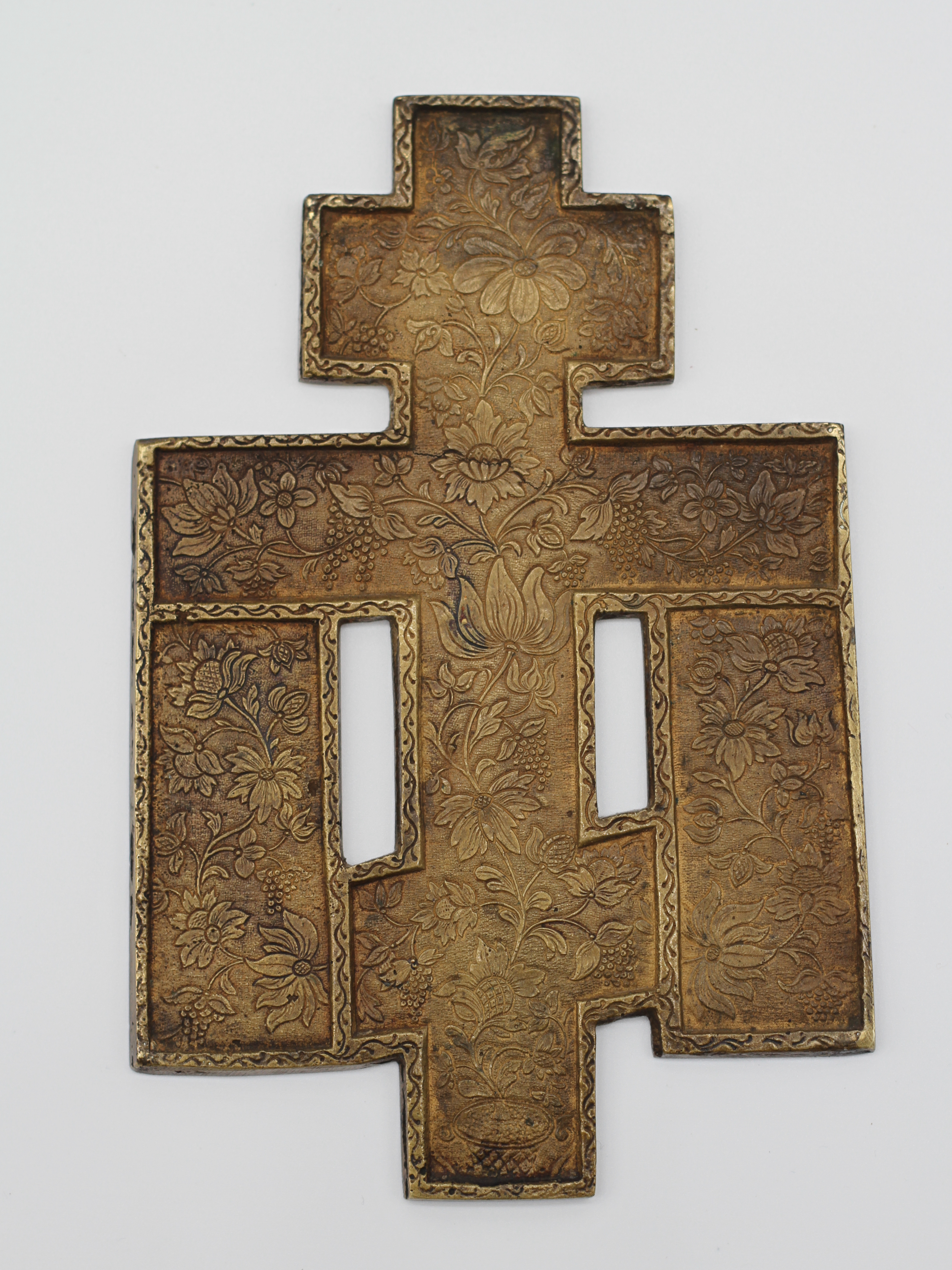
High-resolution photographs are available on request. Images shown on this website may have been edited for presentation purposes. For a definitive assessment of the object, please contact us to request unedited original photographs.
Price on request
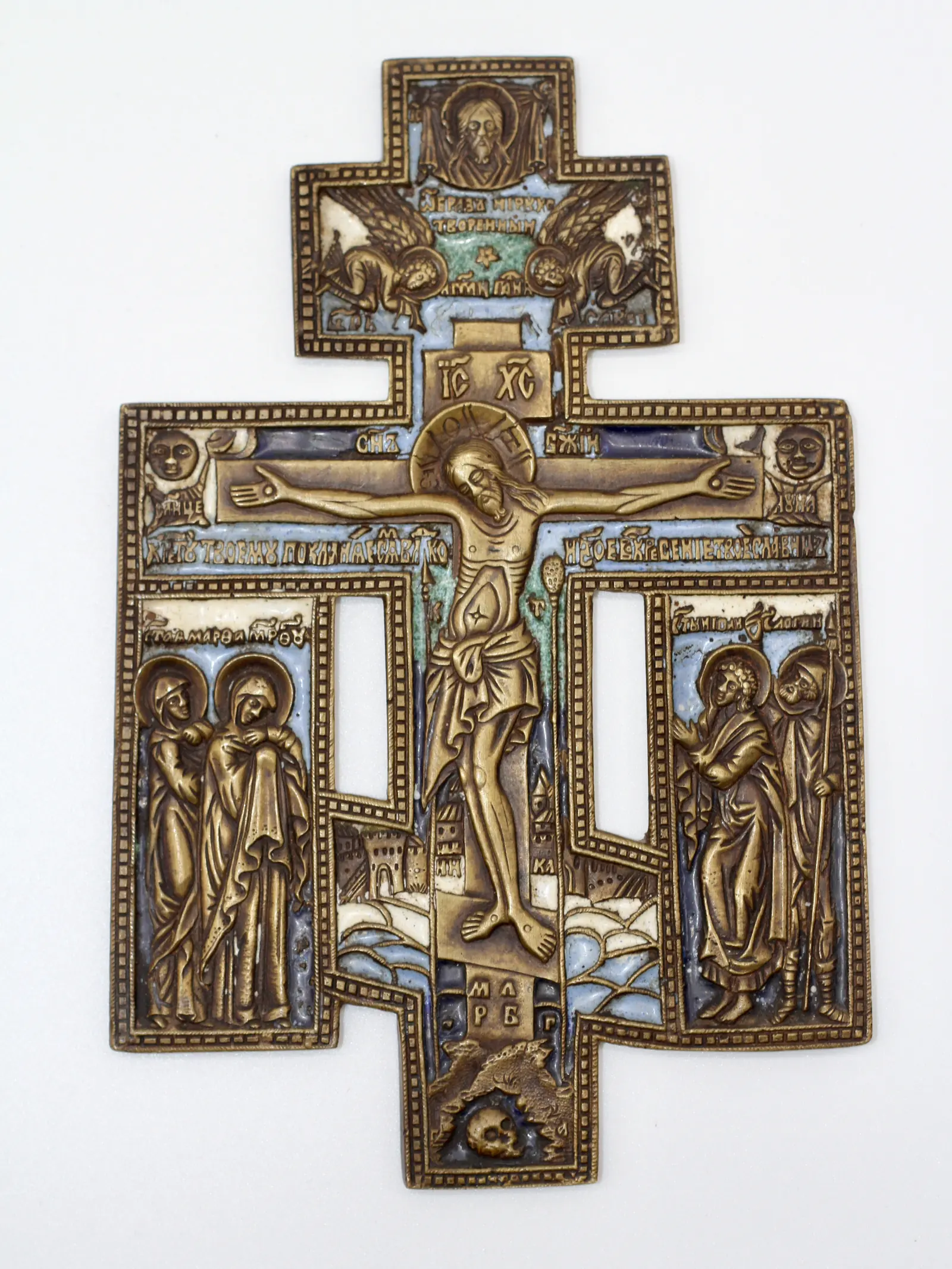
Russian Orthodox cross in bronze, brass, and multicolored enamel dating from the late 19th century. This richly decorated crucifixion cross combines the Passion of Christ with the promise of the Resurrection and represents one of the finest forms of Russian metal icon craftsmanship.
Bronze cross from the 19th century, 17 × 11 cm.
This Russian Orthodox cross from the late nineteenth century represents a classic example of Russian metal icon craftsmanship. Cast in bronze and brass and enriched with multicolored enamel decoration, it combines fine workmanship with an extraordinary wealth of theological symbolism. Crosses of this type were used both in private devotional settings and in churches, serving as visible reminders of Christ’s redemptive sacrifice. At the center appears the crucified Christ.
On either side are depicted the instruments of the Passion: the Holy Lance that pierced His side and the reed bearing the sponge used to offer Him vinegar. The sun and moon flank the Crucifixion, emphasizing the cosmic significance of the event. All creation participates in the mystery of Christ’s sacrifice. Beneath the Cross appear the walls of Jerusalem, the hill of Golgotha, and the skull of Adam. According to ancient Christian tradition, Christ was crucified at the place where Adam had been buried.
The image therefore presents the Crucifixion as the redemption of all humanity, beginning with the first man. Particularly noteworthy is the iconography of the upper section of the cross. Here appears the Mandylion, the miraculous “Image Not Made by Human Hands,” accompanied by two angels. In Orthodox tradition, this image holds profound significance as the origin of all representations of Christ and as a witness to the reality of the Incarnation.
The combination of the Mandylion and the Crucifixion emphasizes that the same Christ whose face was revealed to humanity freely accepted the Cross for the salvation of the world. The characteristic form of the Orthodox Cross with its three crossbeams carries deep symbolic meaning. The upper beam represents the inscription placed above Christ, the central beam marks the Crucifixion itself, and the lower diagonal beam represents His footrest.
The ascending side symbolizes the repentant thief and the path toward Paradise, while the descending side recalls the rejection of divine grace. The inscription, “We venerate Thy Cross, O Master, and glorify Thy holy Resurrection,” expresses the central message of Orthodox spirituality: Cross and Resurrection are inseparable realities. The colorful enamel inlays, finely executed reliefs, and harmonious composition make this cross an outstanding example of Russian sacred art from the final decades of the Imperial era.
Object identity
- Object title
- Bronze cross
- Inventory number
- 25034
- Origin or type
- Bronze Icons
- Date
- 19th Century
- Dimensions
- 17 × 11 cm
- Canonical page
- https://ikonen-mautner.com/en/collection/bronzekreuz-25034
Learn about object identification and certificate verification