The Seven Sleepers of Ephesus | Russian icon, 19th century
High-resolution photographs are available on request. Images shown on this website may have been edited for presentation purposes. For a definitive assessment of the object, please contact us to request unedited original photographs.
Price on request
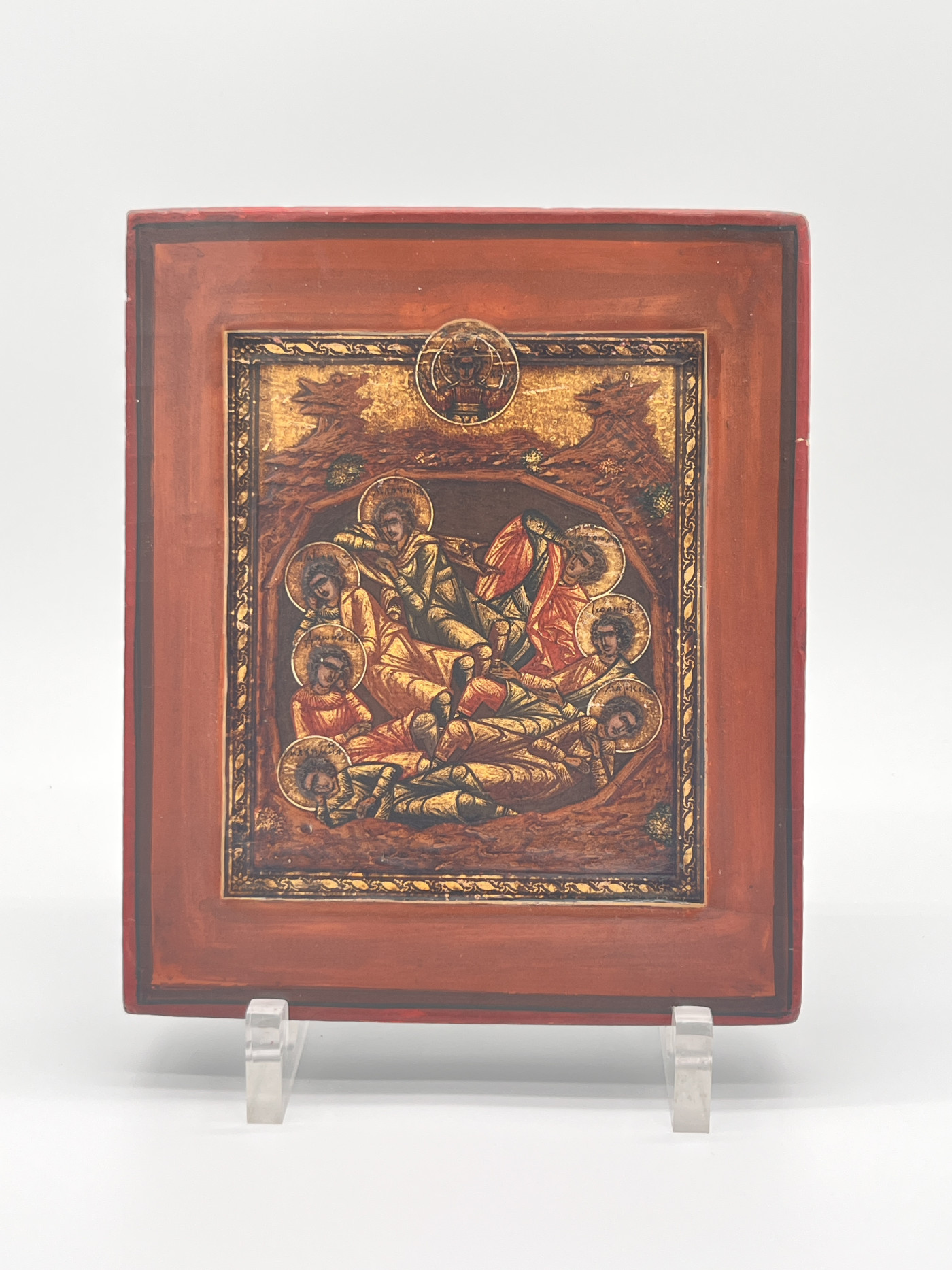
Rare 19th-century Russian icon of the Seven Sleepers of Ephesus with Christ Emmanuel enthroned above. This uncommon subject combines the hope of resurrection with the presence of Christ as the eternal Son of God and ranks among the most profound themes of Orthodox iconography.
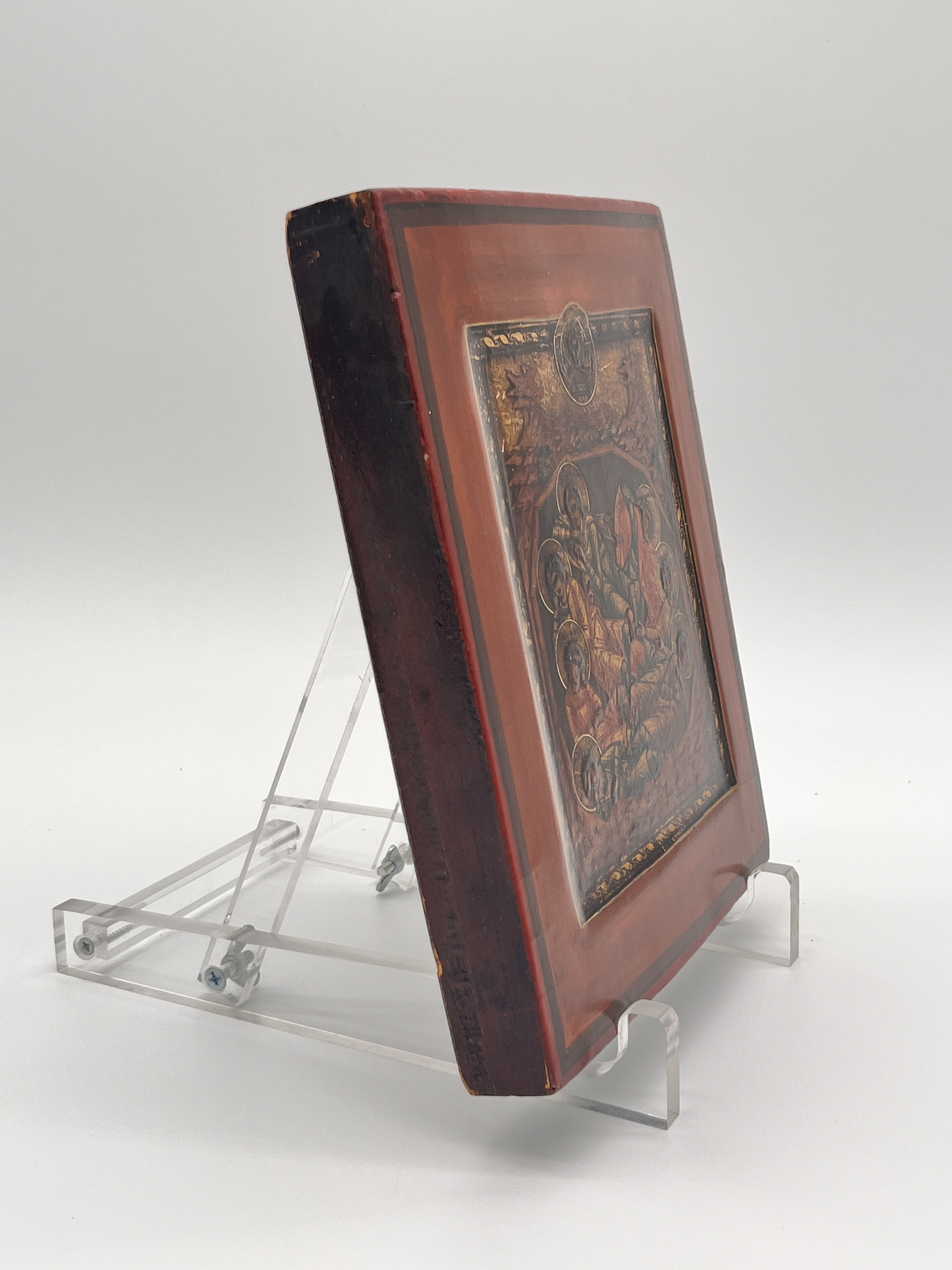
Russian icon from the 19th century, 21.7 × 18.3 cm.
This exceptional 19th-century Russian Orthodox icon depicts the Seven Sleepers of Ephesus, a subject that is relatively uncommon within Orthodox iconography yet carries profound spiritual significance. In the lower part of the composition, the seven young Christians are shown resting within a cave set in a rocky landscape. Above them appears Christ Emmanuel within a heavenly glory, blessing and facing the viewer. The combination of these two themes creates a powerful theological statement concerning God’s presence in life, death, and resurrection.
The legend of the Seven Sleepers originated in early Christianity and was venerated for centuries throughout both Eastern and Western traditions. During the persecutions under Emperor Decius in the third century, seven young men refused to renounce their Christian faith. They sought refuge in a cave outside Ephesus, where God caused them to fall into a miraculous sleep. More than two hundred years later, during the reign of Emperor Theodosius II, they awoke and became a living testimony to the reality of bodily resurrection.
At a time when questions concerning life after death were actively debated, the story became a powerful symbol of Christian hope and divine authority over mortality. Particularly noteworthy is the depiction of Christ Emmanuel, meaning “God with us.” This iconographic type presents Christ as the youthful Son of God and emphasizes His eternal existence before the Incarnation.
In connection with the Seven Sleepers, Emmanuel acquires an additional theological meaning: Christ is revealed as Lord of time and eternity, accompanying humanity through sleep, death, and resurrection. The warm color palette, narrative composition, and rare iconography make this work a remarkable example of nineteenth-century Russian sacred art. At the same time, the icon conveys a universal message of hope, divine protection, and the triumph of eternal life over death and decay.
Object identity
- Object title
- The Seven Sleepers of Ephesus
- Inventory number
- 25131
- Origin or type
- Russian Icons
- Date
- 19th Century
- Dimensions
- 21.7 × 18.3 cm
- Canonical page
- https://ikonen-mautner.com/en/collection/die-siebenschlaefer-von-ephesus-25131
Learn about object identification and certificate verification