Unburnt Bush | Russian icon, dated 1853
High-resolution photographs are available on request. Images shown on this website may have been edited for presentation purposes. For a definitive assessment of the object, please contact us to request unedited original photographs.
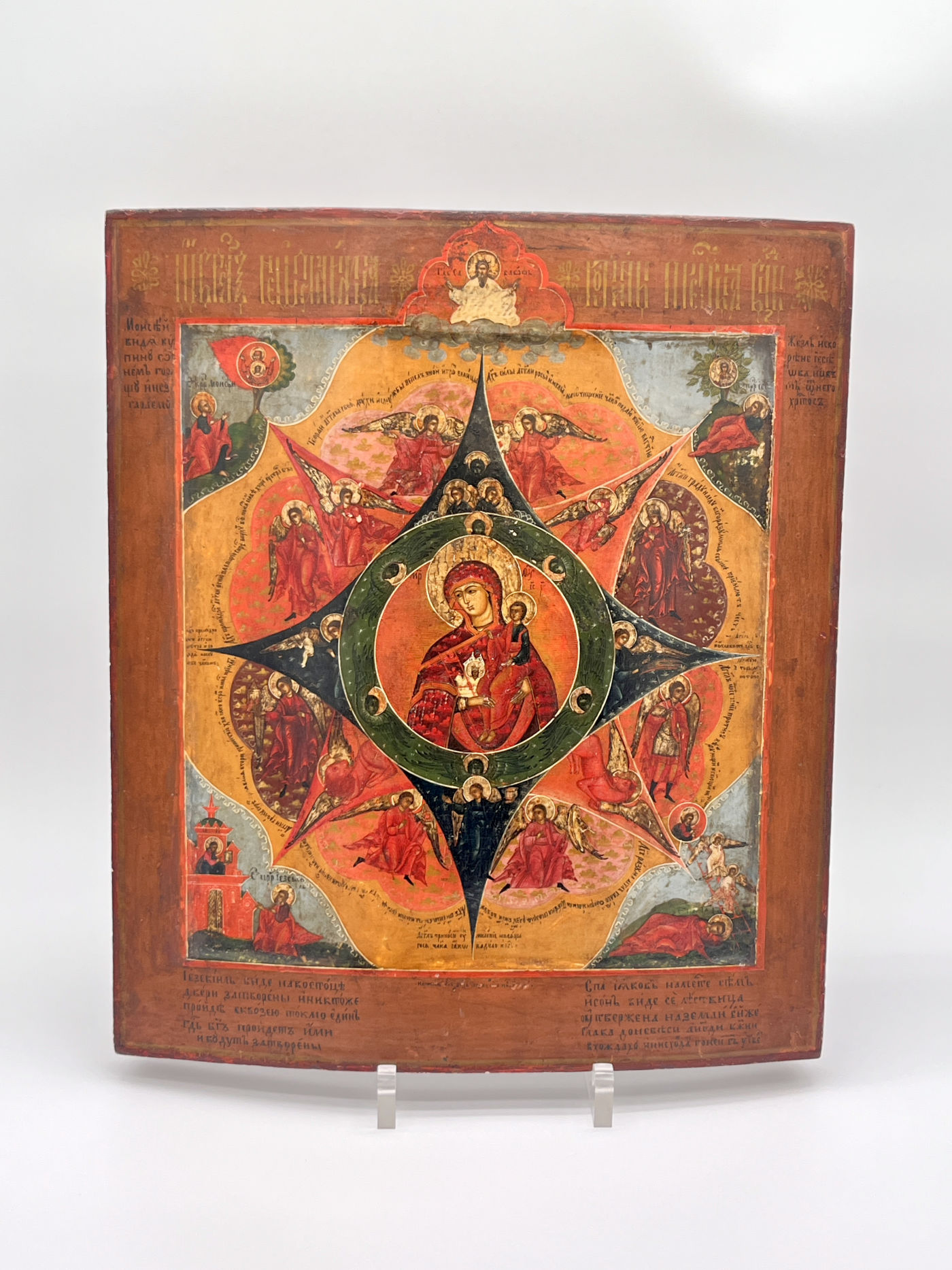
Rare Russian icon of the Mother of God of the “Burning Bush” (Neopalimaya Kupina), dated 1853, featuring a complex theological program and numerous Church Slavonic inscriptions. This important protective icon unites Old Testament prophecy, Orthodox Marian devotion, and sophisticated 19th-century Russian icon painting.
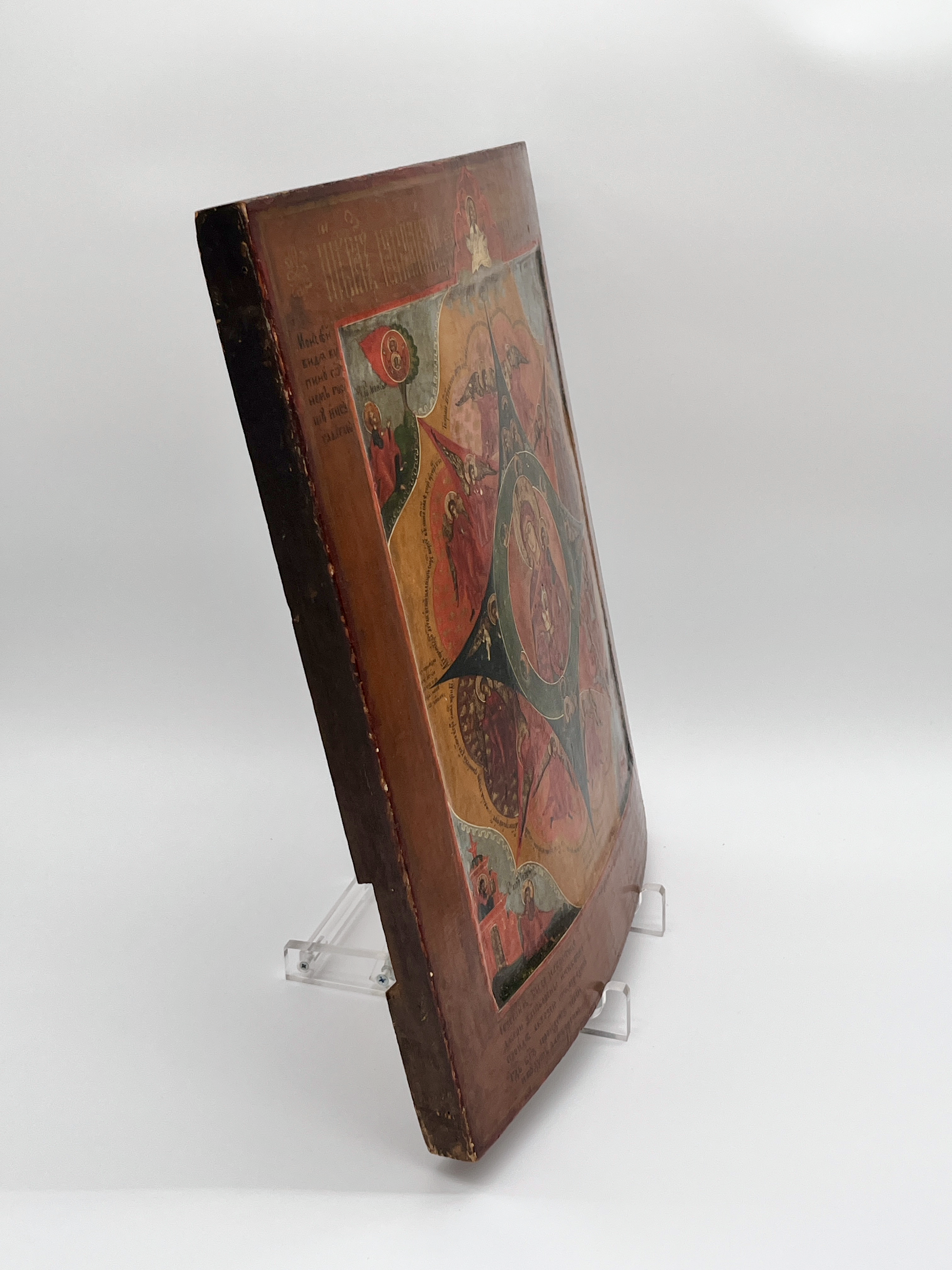
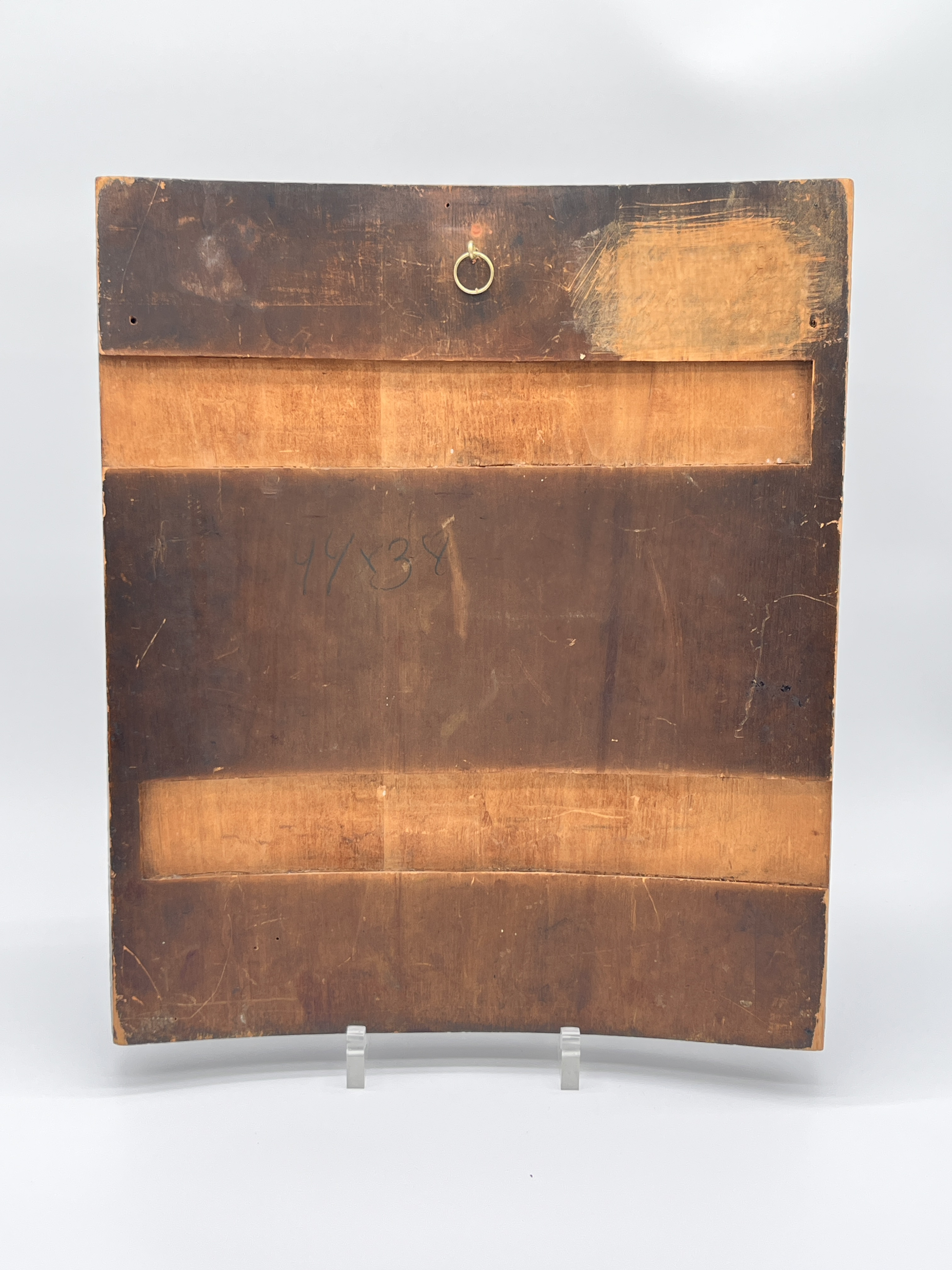
Russian icon, dated 1853, 44.4 × 38.9 cm.
This extraordinary Russian Orthodox icon of the Mother of God of the “Burning Bush” (“Neopalimaya Kupina”) was created in 1853 and belongs to the most complex and symbolically rich image types of Orthodox iconography. At the center appears the Mother of God with the Christ Child enclosed within a radiant star-shaped mandorla formed by intersecting red and green rhomboid elements. This geometric structure symbolizes the union of the divine and human natures in the Incarnation of Christ.
Surrounding the central image are angels, prophetic visions, and Old Testament scenes interpreted in Orthodox theology as prefigurations of the Virgin Mary. The iconographic foundation of the composition derives from God’s appearance to Moses in the Burning Bush (Exodus 3). In Orthodox interpretation, the bush symbolizes the Virgin Mary, who bore within herself the divine fire of the Godhead without being consumed — a profound symbol of the virginal birth of Christ.
Numerous additional scenes expand this sophisticated theological program, including Jacob’s Ladder, the Closed Gate of the Prophet Ezekiel, angelic apparitions, and prophetic visions from the Old Testament. Particularly remarkable are the many original Church Slavonic inscriptions containing biblical quotations and liturgical texts, reflecting the icon’s deep integration into the spiritual culture of the Russian Empire.
Of exceptional art historical significance is the original painted date executed according to the Byzantine-Church Slavonic calendar system, corresponding precisely to the year 1853. Dated examples of this iconographic type are comparatively rare and allow for exact historical attribution.
Stylistically, the icon displays all the characteristic features of high-quality mid-19th-century Russian icon painting: luminous cinnabar and ochre tones, finely executed angelic figures, richly gilded backgrounds, and the close integration of text and image within a rigorously theological visual concept. Icons of the “Neopalimaya Kupina” type were traditionally venerated as protective icons against fire, lightning, war, and catastrophe, both in churches and in private household devotion.
Object identity
- Object title
- Mother of God of the Unburnt Bush
- Inventory number
- 25120
- Origin or type
- Russian Icons
- Date
- 19th Century
- Dimensions
- 44.4 × 38.9 cm
- Canonical page
- https://ikonen-mautner.com/en/collection/gottesmutter-vm-unverbrennbaren-dornbusch-25120
Learn about object identification and certificate verification
Sold — this archive record stays online for art-historical reference.