Mother of God Tricheirousa, the Three-Handed | 19th century
High-resolution photographs are available on request. Images shown on this website may have been edited for presentation purposes. For a definitive assessment of the object, please contact us to request unedited original photographs.
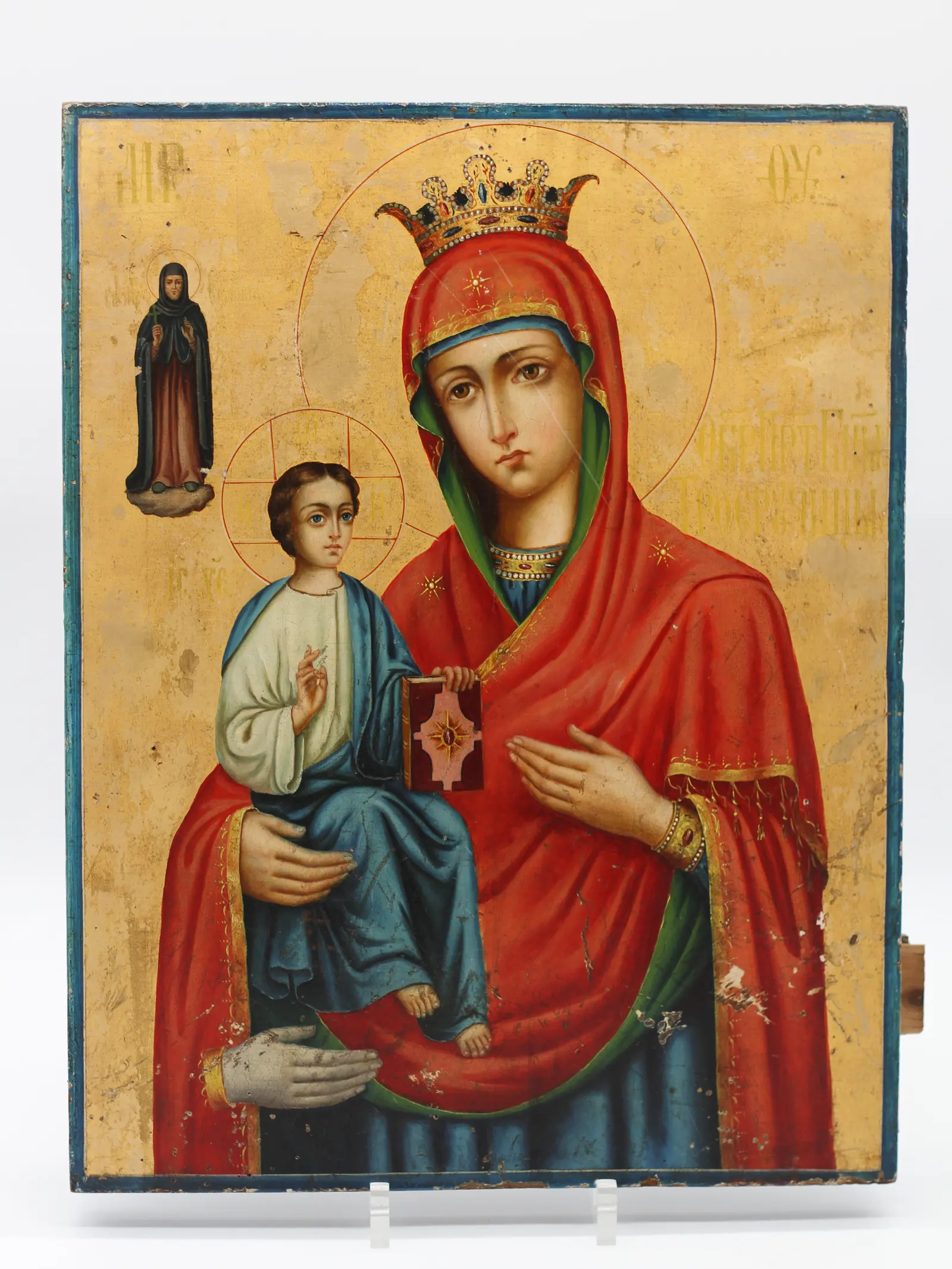
Russian icon of the Mother of God Tricherousa (“The Three-Handed”) from the 19th century. Closely associated with Saint John of Damascus, this celebrated image ranks among the most important miracle-working icons of the Orthodox world.
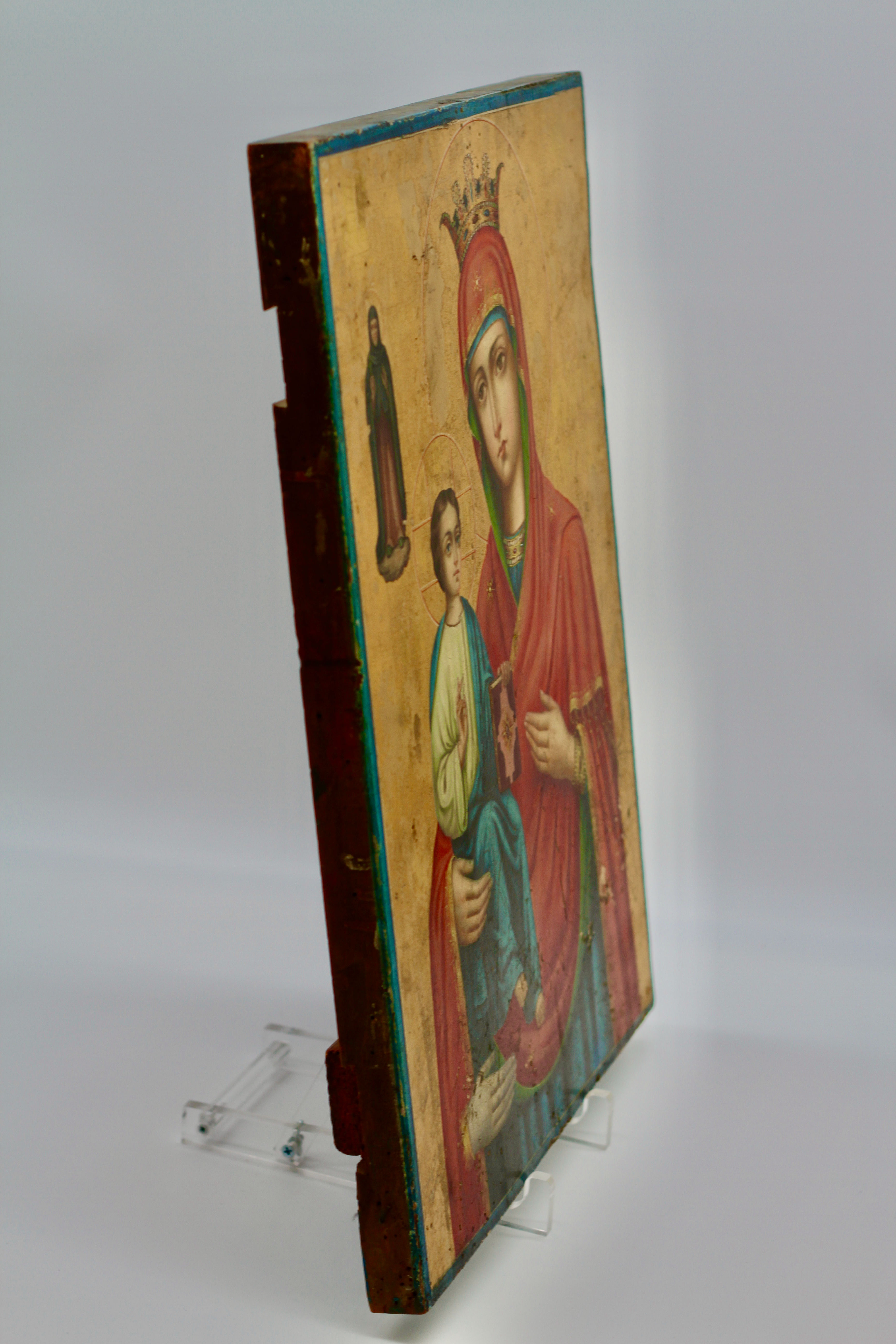
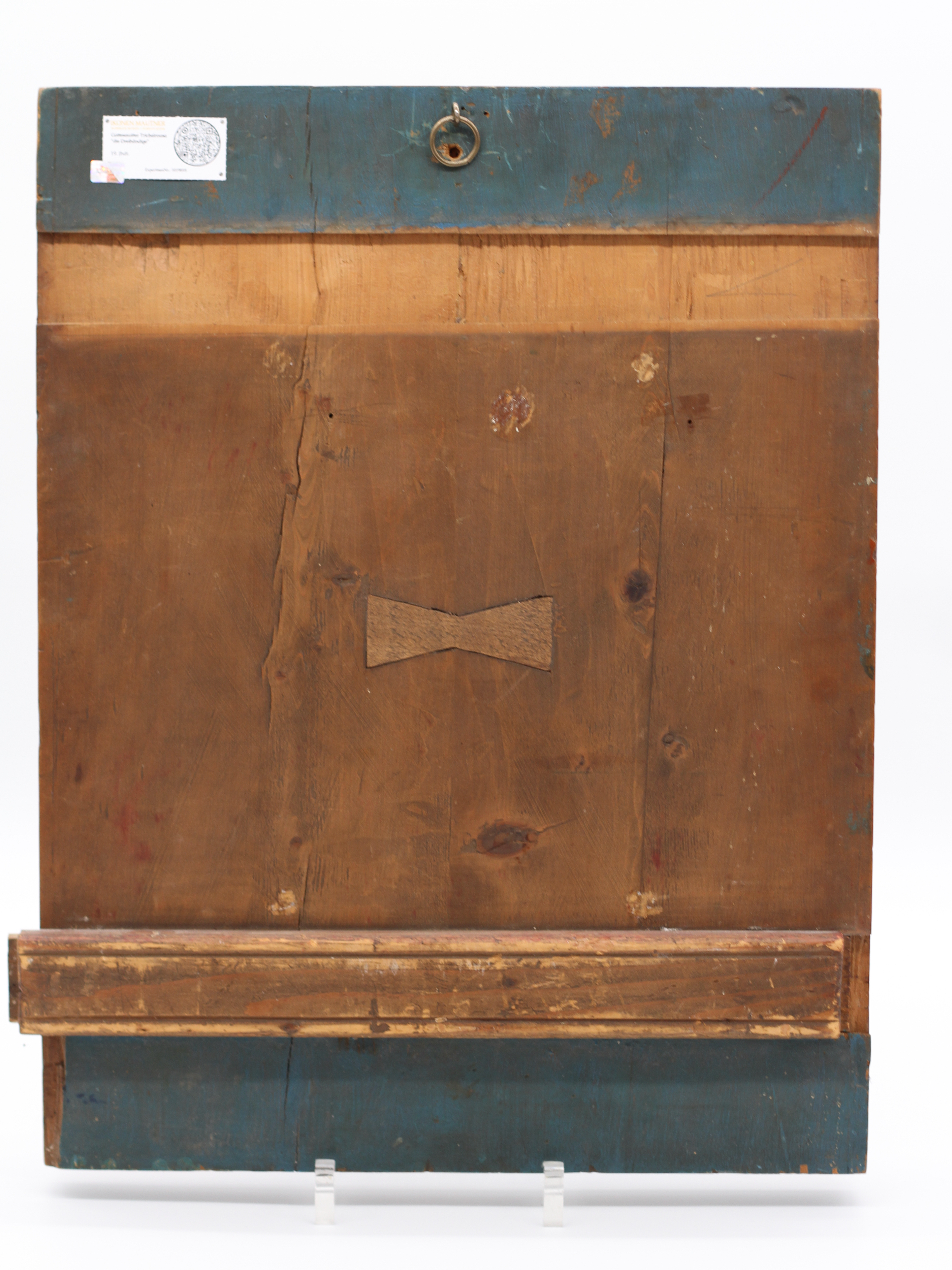
Russian icon from the 19th century, 54 × 41.5 cm.
This impressive nineteenth-century Russian icon depicts the Mother of God Tricherousa, known as “The Three-Handed Mother of God.” At first glance, the composition follows the familiar Hodegetria type, in which the Virgin carries the Christ Child and points toward Him as the path to salvation. Its distinctive feature, however, is the additional third hand visible in the lower part of the image, from which the icon derives its name.
The Tricherousa is among the most celebrated miracle-working Marian images of the Orthodox world and enjoys particular veneration in the Greek, Serbian, and Russian traditions. The origin of this iconographic type is closely connected with Saint John of Damascus, one of the greatest theologians and defenders of sacred images during the eighth century. During the Iconoclastic Controversy, John was falsely accused of treason. As punishment, the Caliph of Damascus ordered his right hand to be severed.
In his suffering, John prayed before an icon of the Mother of God and implored her assistance. During the night, the Virgin appeared to him and miraculously restored his hand. In gratitude, John commissioned a silver replica of his healed hand and attached it to the icon as a votive offering. From this event emerged the image of the “Three-Handed Mother of God,” which became a powerful symbol of healing, divine assistance, and heavenly intercession.
Veneration of the Tricherousa first flourished in the Monastery of Saint Sabbas near Jerusalem before spreading to Serbia. The miraculous icon was eventually brought to the Serbian Monastery of Hilandar on Mount Athos, where it remains one of the monastery’s most treasured sacred objects. In the upper section of the present icon appears Saint Eudocia of Persia, adding an additional devotional dimension to the composition.
Its harmonious arrangement, luminous colors, and profound symbolic meaning make this icon an outstanding expression of Orthodox Marian devotion. At the same time, it serves as a reminder of the power of faith, the intercession of the Mother of God, and the triumph of sacred images within Christian tradition.
Object identity
- Object title
- Mother of God of Damascus | Tricherousa | Three-handed
- Inventory number
- 24796
- Origin or type
- Russian Icons
- Date
- 19th Century
- Dimensions
- 54 × 41.5 cm
- Canonical page
- https://ikonen-mautner.com/en/collection/gottesmutter-von-damaskus-24796
Learn about object identification and certificate verification
Sold — this archive record stays online for art-historical reference.