Saint Spyridon | Greek icon, dated 1848
High-resolution photographs are available on request. Images shown on this website may have been edited for presentation purposes. For a definitive assessment of the object, please contact us to request unedited original photographs.
Price on request
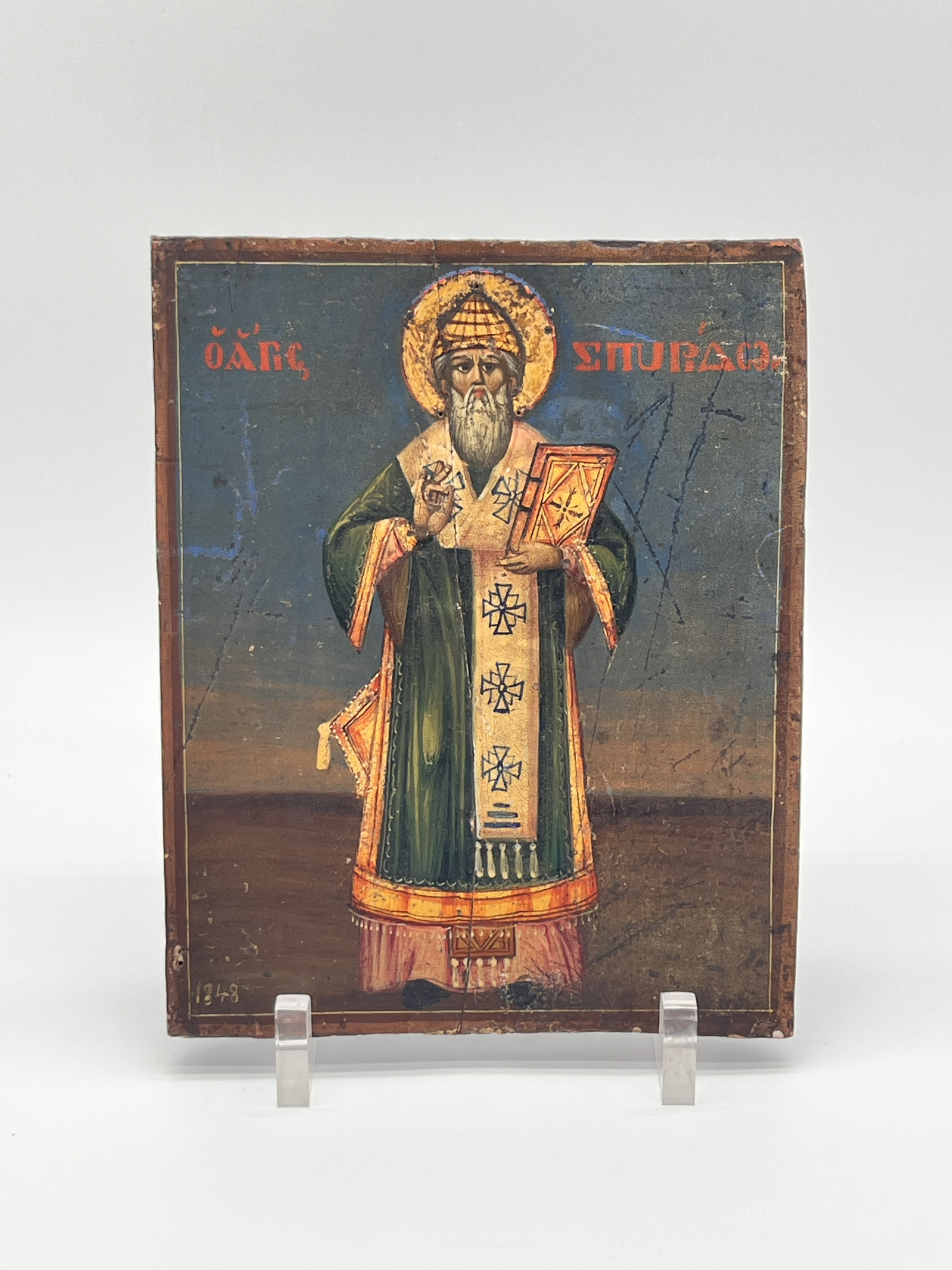
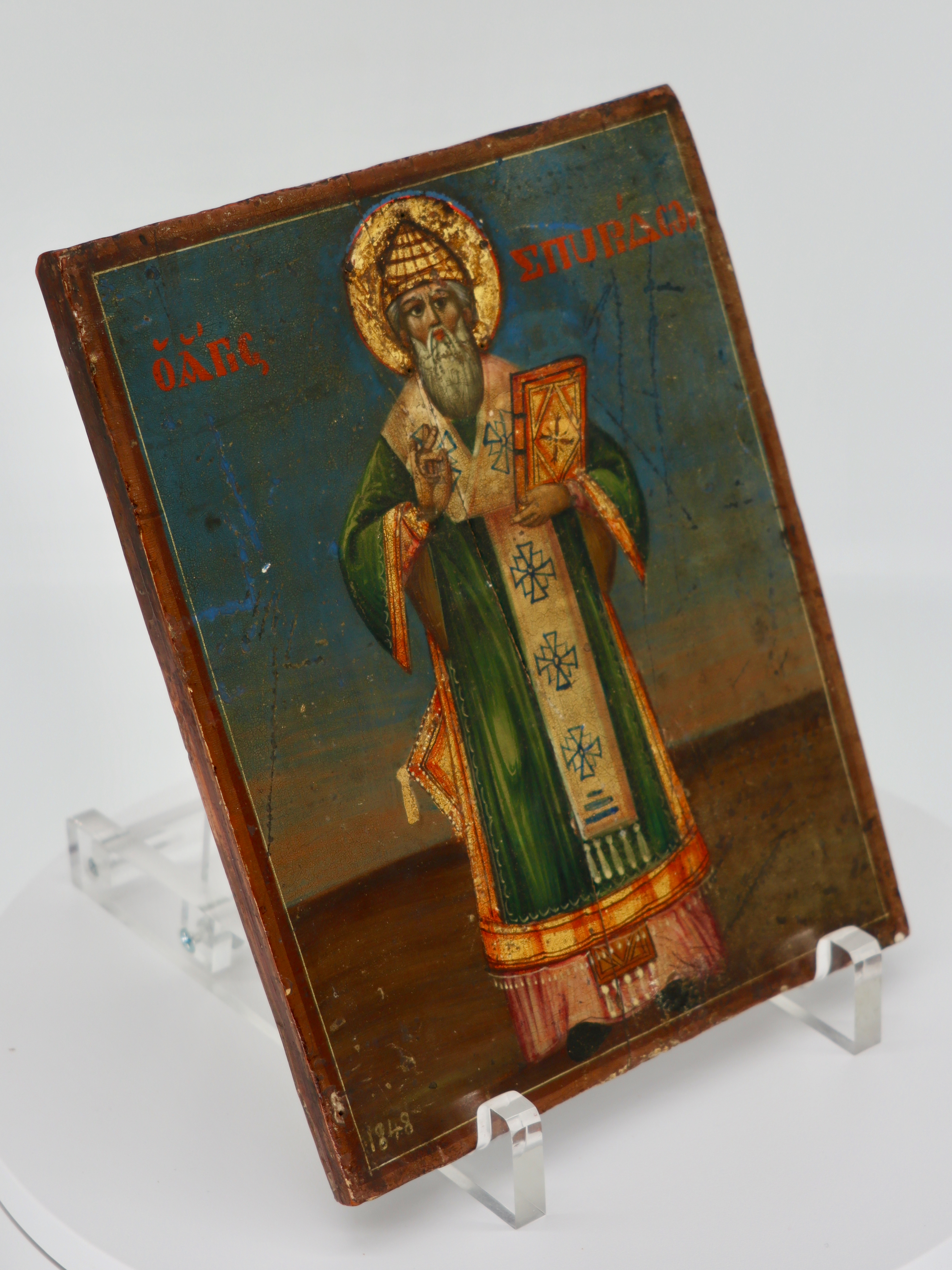
This refined Greek Orthodox icon dated 1848 depicts Saint Spyridon of Trimythous, one of the most beloved and widely venerated saints of the Orthodox world. The saint is presented frontally against a calm blue-grey background that powerfully emphasizes his spiritual presence. With his right hand he offers the Orthodox blessing, while his left hand holds the closed Gospel, symbolizing his preaching and steadfast faith.
Particularly distinctive is the woven shepherd’s cap upon his head, one of the saint’s most recognizable iconographic attributes. It refers to his humble origins as a shepherd on Cyprus and symbolizes the deep humility with which he later exercised his episcopal office. The radiant gilding of the halo and borders contrasts beautifully with the deep blue and grey tones of the background, giving the icon exceptional luminosity.
Equally remarkable is the extraordinary state of preservation of this dated icon. The paint surface remains largely intact, the colors retain impressive freshness, and even the gilding shows only minimal wear. As a result, the work still conveys the quiet spiritual intensity characteristic of high-quality 19th-century Greek icon painting.
Greek icon, dated 1848, 23.3 × 18.8 cm.
Saint Spyridon of Trimythous ranks among the most beloved and widely venerated saints of the Greek Orthodox Church. This exceptionally well-preserved icon dated 1848 combines the timeless language of Byzantine iconography with the refined painterly developments of 19th-century post-Byzantine art. Presented in calm frontal pose, the saint appears simultaneously as spiritual shepherd and miracle-worker — theologically authoritative yet marked by remarkable human warmth and accessibility.
The composition focuses entirely on the monumental presence of the figure. The restrained blue-grey background intentionally avoids narrative detail and intensifies the contemplative power of the image. Against this calm field, the saint emerges with striking clarity. Spyridon wears the liturgical vestments of an Orthodox bishop together with a richly gilded omophorion adorned with crosses, emphasizing his role as teacher and defender of the faith.
In his left hand he holds the Gospel as a symbol of divine truth, while his right hand is raised in the traditional Orthodox gesture of blessing. Particularly characteristic is the woven shepherd’s cap that immediately identifies the saint. This iconographic attribute refers to his humble origins as a shepherd on Cyprus and symbolizes the humility and simplicity that continue to define his veneration today. It is precisely the union of modest origins and profound spiritual authority that made Spyridon one of the most beloved saints of the Orthodox world.
Historically, Spyridon is especially associated with the First Council of Nicaea in 325, where he defended Orthodox doctrine against Arianism. According to tradition, he demonstrated the mystery of the Holy Trinity through the famous “Miracle of the Brick”: taking an unfired brick into his hand, fire rose upward, water flowed downward, while earth remained behind — three elements within one brick, symbolizing the triune God. This miracle became one of the central theological symbols associated with his iconography.
After his death, devotion to Saint Spyridon flourished especially on the island of Corfu, where his relics were transferred during the 15th century. He remains the island’s principal patron saint to this day. Four annual processions commemorate miracles attributed to him, including protection from plague, famine, and other dangers. According to popular tradition, the saint is regularly given new shoes because the old ones become worn from his continual wanderings among the faithful — a poetic symbol of his enduring spiritual presence.
This icon was created during a period when post-Byzantine artistic tradition experienced renewed vitality on the Ionian Islands and the Greek mainland. Painters preserved the classical structures of Byzantine iconography while introducing subtler color transitions and softer facial modeling. This synthesis of spiritual austerity and refined painterly elegance makes the present icon an outstanding example of 19th-century Greek sacred art.
Object identity
- Object title
- Saint Spyridon
- Inventory number
- 25133
- Origin or type
- Greek Icons
- Date
- 19th Century
- Dimensions
- 23.3 × 18.8 cm
- Canonical page
- https://ikonen-mautner.com/en/collection/heiliger-spyridon-25133
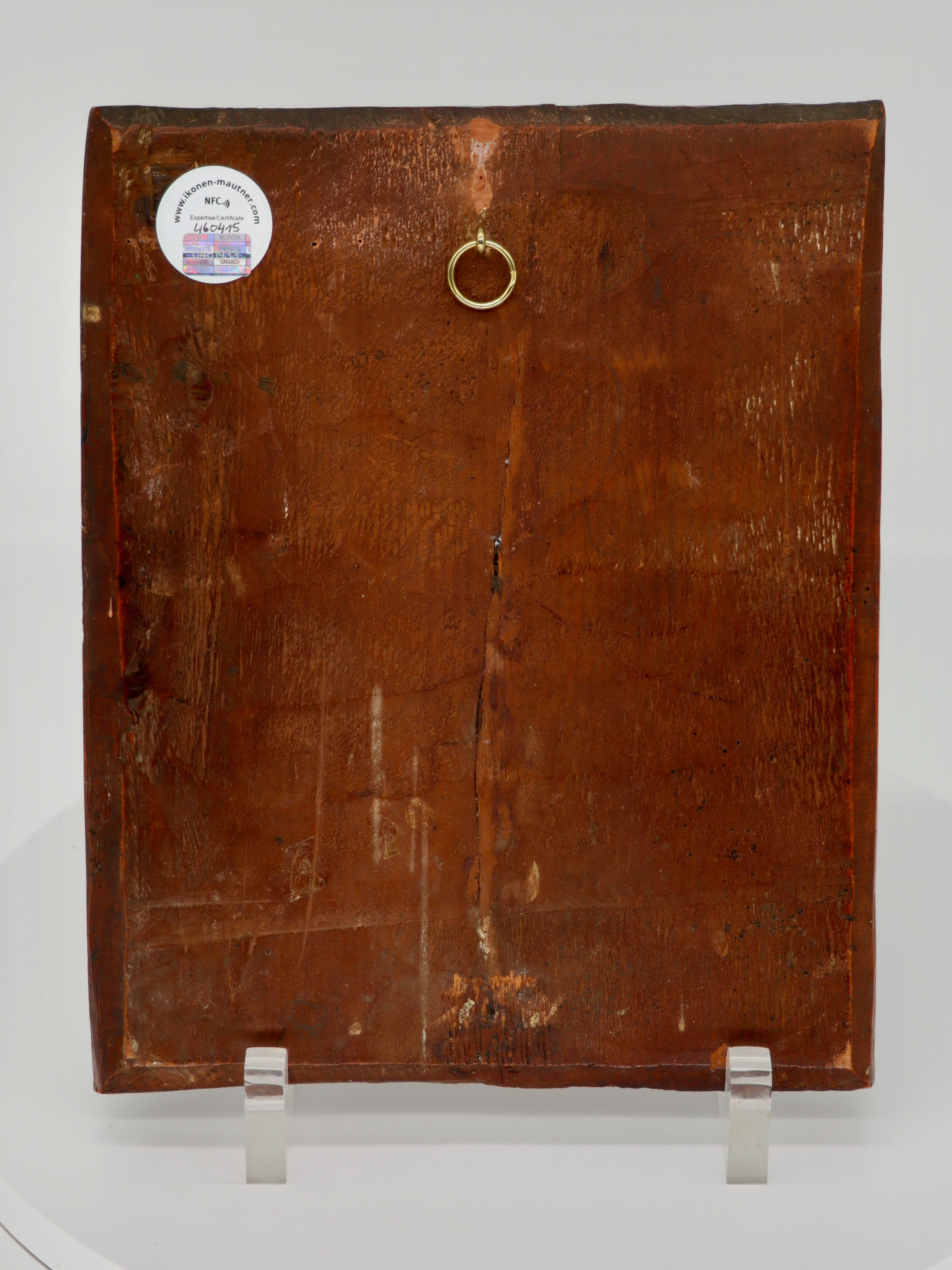
Learn about object identification and certificate verification