Russian pectoral cross in bronze | 18th century
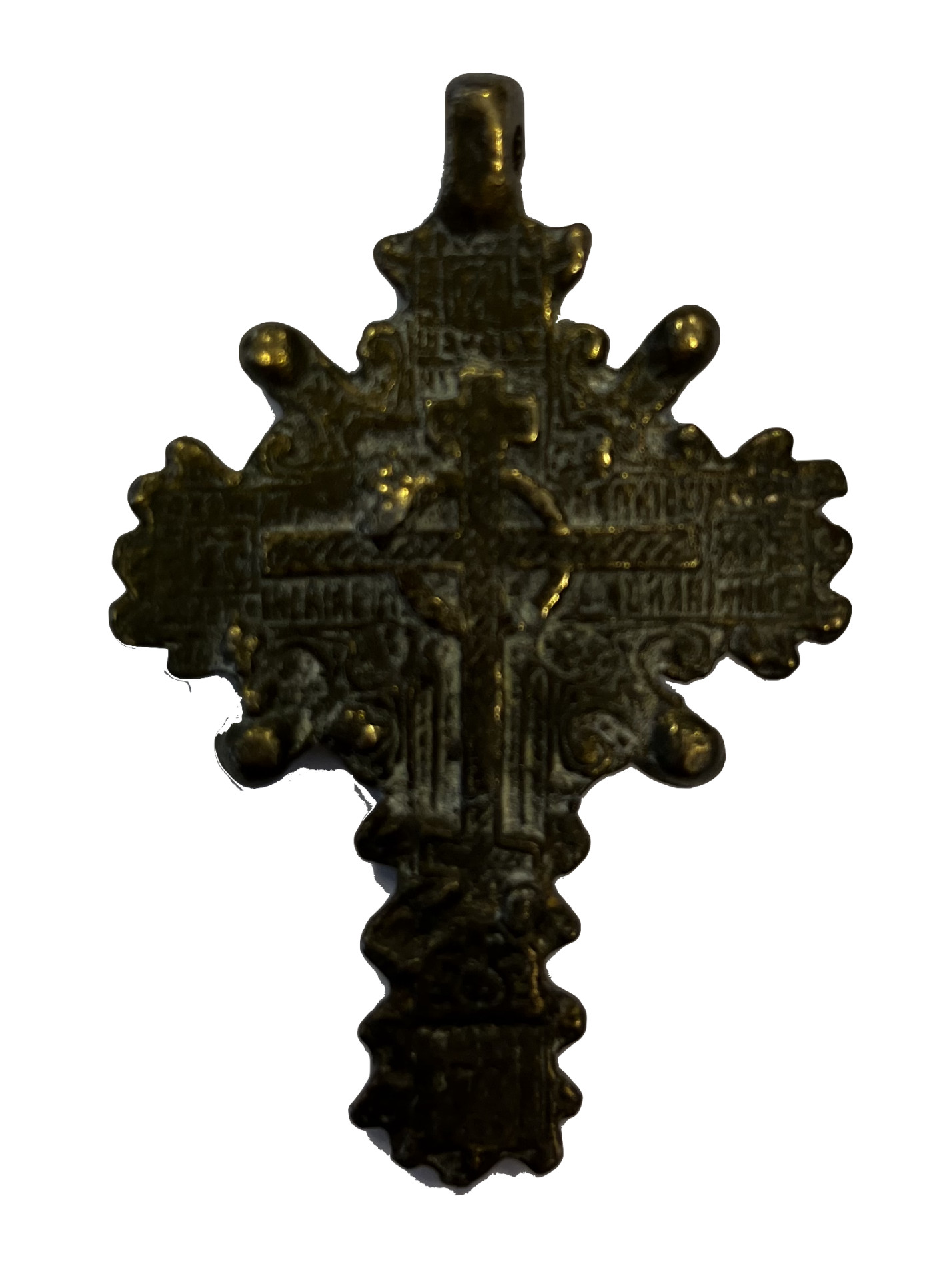
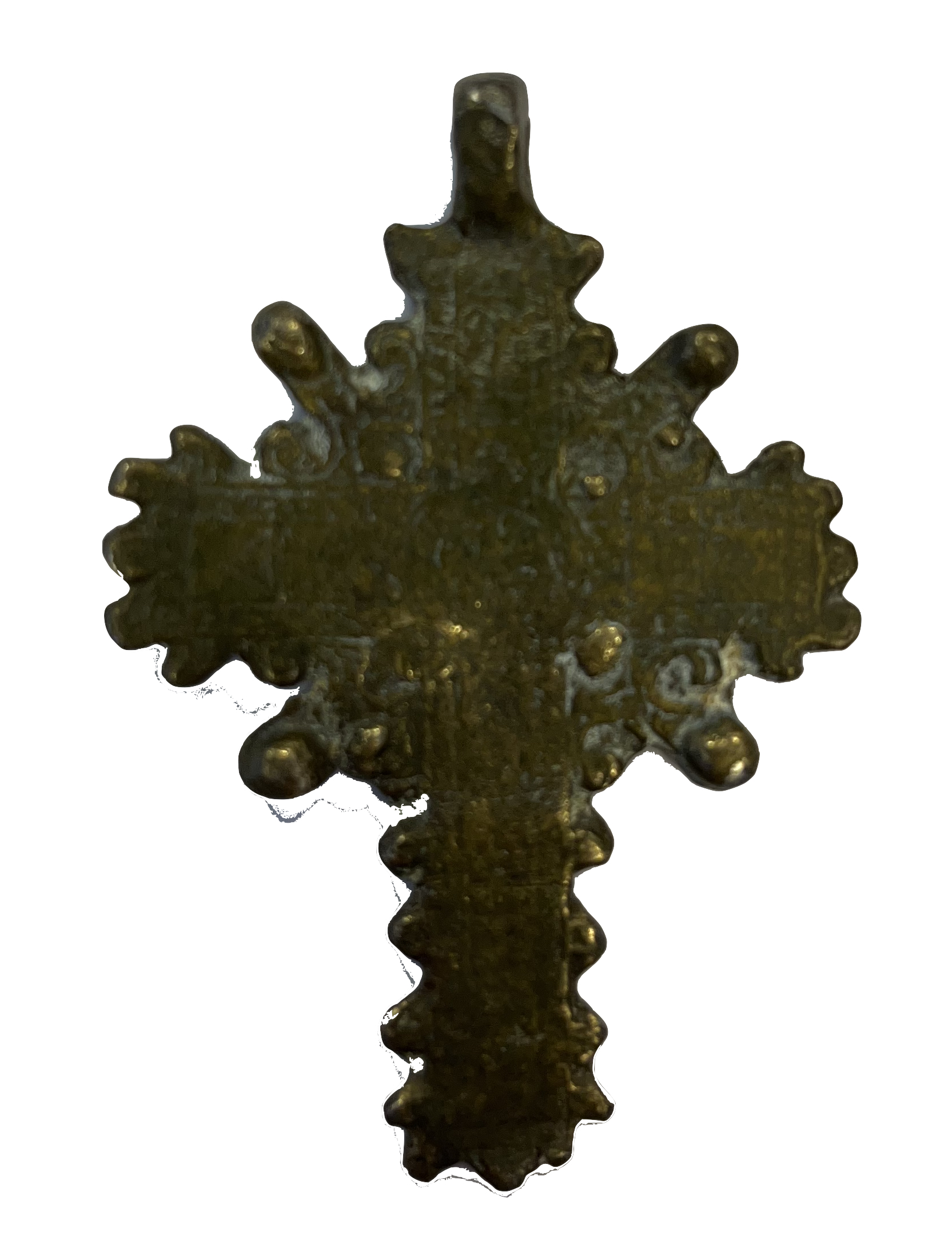
High-resolution photographs are available on request. Images shown on this website may have been edited for presentation purposes. For a definitive assessment of the object, please contact us to request unedited original photographs.
Rare Russian baptismal cross in bronze, brass, and copper from the 18th century. Originally worn on the body, this small devotional object combines the Crucifixion of Christ with the profound symbolism of the Orthodox Cross and served as a lifelong companion of faith.
Bronze cross from the 18th century, 6 × 4 cm.
This rare eighteenth-century Russian baptismal cross belongs to a special category of Orthodox pectoral crosses traditionally received at baptism and often worn throughout a believer’s entire life. Cast in an alloy of copper, bronze, and brass, it combines remarkable craftsmanship with profound theological symbolism. Despite its small size, the cross was carefully designed and served not only as a personal confession of faith but also as a visible sign of divine protection and membership within the Orthodox Church.
At the center appears the crucified Christ. On either side are depicted the traditional instruments of the Passion: the spear of Longinus that pierced Christ’s side and the reed with the sponge used during the Crucifixion. These elements recall the events of the Passion while emphasizing the Orthodox understanding of the Cross as the instrument of salvation. The inscription, “King of Glory, Jesus Christ, Son of God,” focuses not on suffering alone but on Christ’s triumph.
In Orthodox theology, the Crucifixion is always understood in the light of the Resurrection. The Cross is therefore not merely a sign of sacrifice but also a symbol of victory over death and corruption. Particularly distinctive is the form of the Orthodox Cross with its three crossbeams. The upper short beam represents the inscription placed above Christ during the Crucifixion. The central beam supports His outstretched arms. The lower diagonal beam represents the footrest and carries deep symbolic meaning.
Its ascending side refers to the repentant thief who entered Paradise, while its descending side symbolizes the unrepentant thief who rejected divine grace. The Cross thus becomes an image of humanity’s choice between salvation and separation from God. As a personal baptismal and protective cross, such an object accompanied its owner throughout daily life, travel, and times of danger. Many examples were passed down through generations and possessed not only religious significance but also deep emotional value.
Surviving eighteenth-century specimens are today rare witnesses to Russian Orthodox devotion. Through its powerful symbolism, historical authenticity, and intimate connection to personal faith, this cross beautifully embodies the spiritual tradition of Orthodox Christianity.
Object identity
- Object title
- Pectoral cross
- Inventory number
- 24913
- Origin or type
- Bronze Icons
- Date
- 18th Century
- Dimensions
- 6 × 4 cm
- Canonical page
- https://ikonen-mautner.com/en/collection/pektoralkreuz-24913
Learn about object identification and certificate verification
Sold — this archive record stays online for art-historical reference.