Mandylion with Moscow silver oklad, 1908–1926
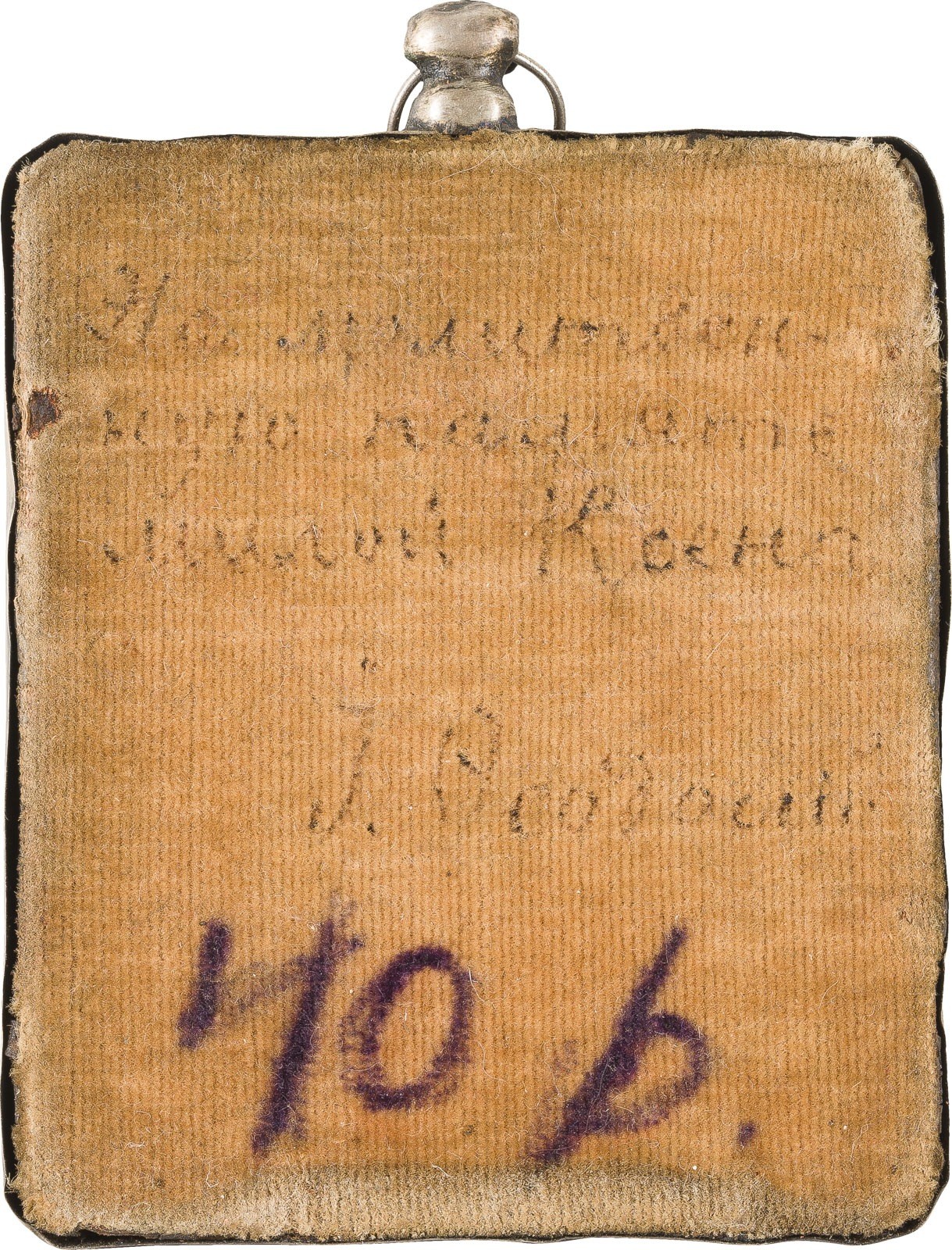
High-resolution photographs are available on request. Images shown on this website may have been edited for presentation purposes. For a definitive assessment of the object, please contact us to request unedited original photographs.
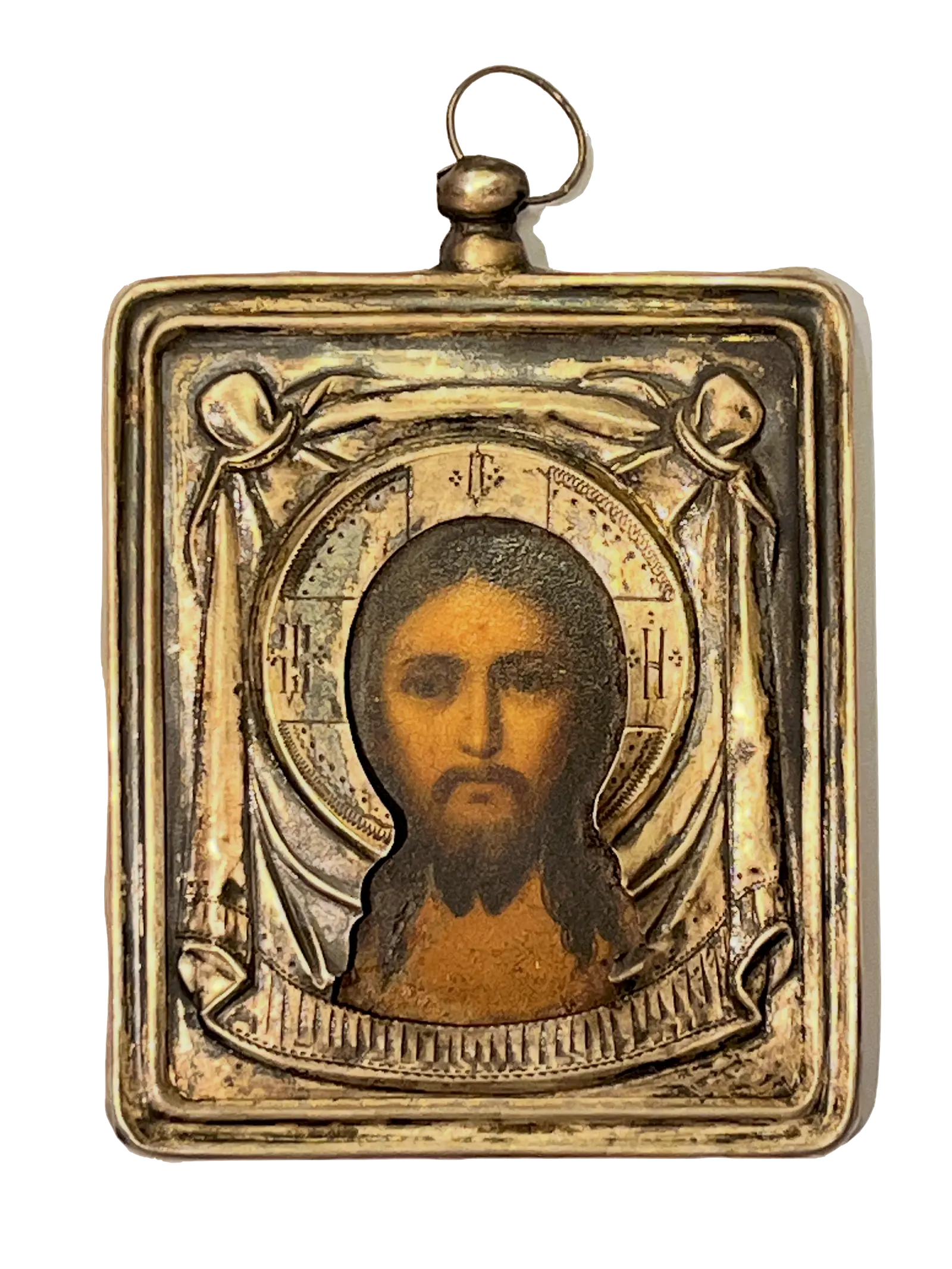
Rare Russian Mandylion icon with an original Moscow silver oklad dating from 1908–1926. The “Image Not Made by Human Hands” is among the oldest and most important depictions of Christ in Orthodox Christianity, combining profound theology with exceptional Russian silver craftsmanship.
Russian icon from the early 20th century, 7.4 × 5.4 cm, with a silver oklad.
This exceptional small Russian icon depicts the Mandylion, the “Image Not Made by Human Hands” (Spas Nerukotvorny). Few iconographic subjects possess such profound theological significance within Orthodox Christianity. At the center appears only the face of Christ—frontal, serene, and timeless. Unlike many other icons, there is no narrative setting, landscape, or secondary figure. The entire composition is devoted to a direct encounter with Christ Himself.
The calm gaze, perfect symmetry of hair and beard, and strict frontal presentation create an image of remarkable spiritual intensity. The origins of this icon type are connected with the famous legend of King Abgar of Edessa. According to tradition, the king suffered from a serious illness and sent a messenger to Christ seeking healing. Christ then pressed a cloth to His face, miraculously leaving the imprint of His features upon it. The cloth was brought to Edessa, where it became a source of healing and protection.
Within Orthodox theology, this narrative holds fundamental importance because it presents the first image of Christ not as a human invention but as a divine gift. The Mandylion is therefore regarded as both the origin and theological foundation of all Christian iconography. It affirms the reality of the Incarnation and the legitimacy of depicting and venerating the human face of God. Particularly remarkable is the original Moscow silver oklad. Its finely chased and engraved surface frames the face of Christ like a precious reliquary.
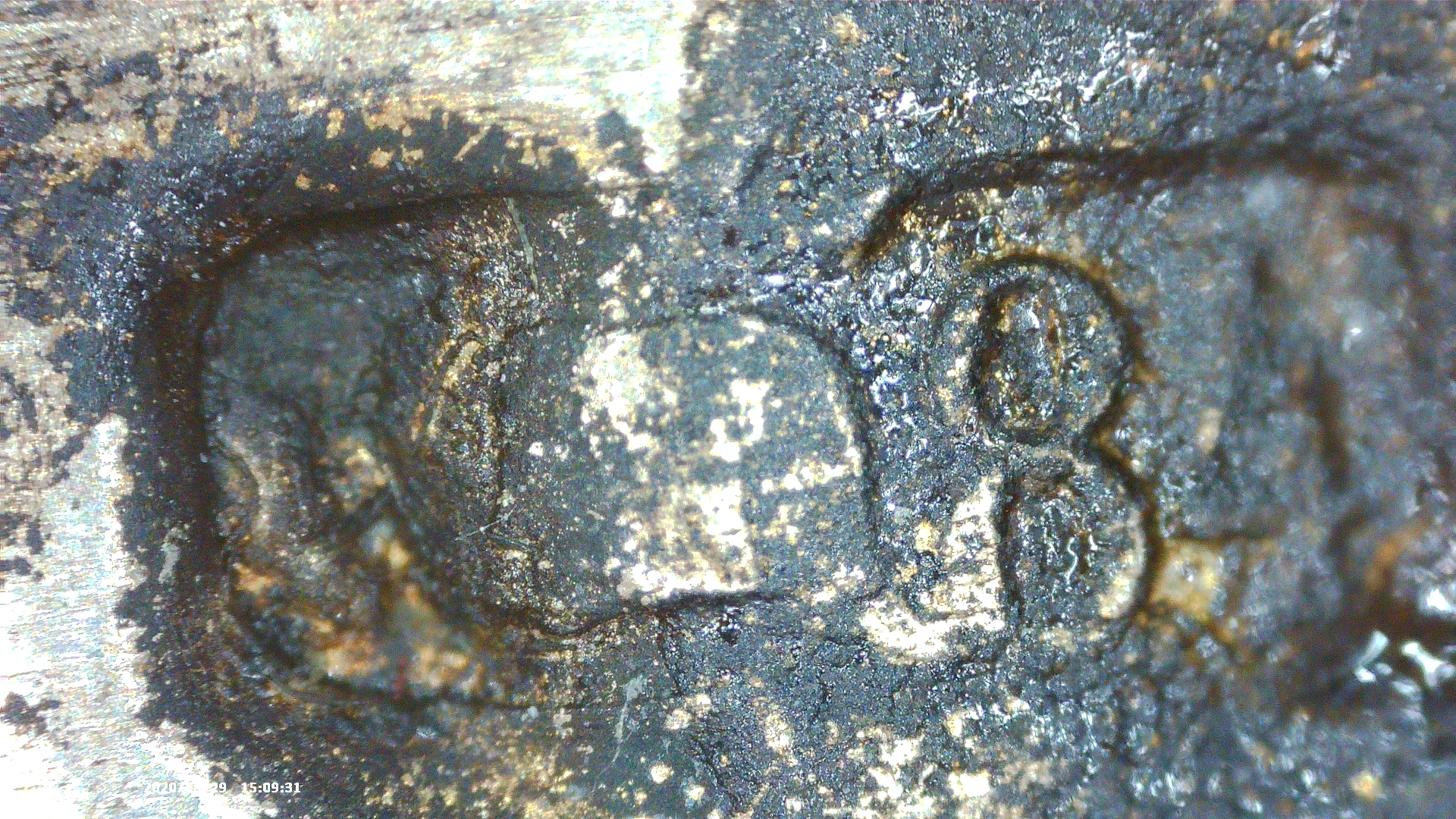
Only the face remains visible, while the surrounding sacred space is translated into luminous silver. Hallmarks date the oklad to the period between 1908 and 1926 and confirm the traditional Russian silver standard of 84 zolotniki. The integrated suspension ring and exceptionally compact dimensions strongly suggest that the icon was intended as a pectoral devotional object worn as a pendant. Such portable icons accompanied their owners in daily life, travel, and prayer.
The Mandylion was especially suited to this intimate form of devotion, as the faithful symbolically carried the very face of Christ close to their heart. The combination of ancient Christian tradition, personal piety, and refined Moscow silverwork makes this icon a particularly compelling expression of Orthodox spirituality.
Object identity
- Object title
- Mandylion
- Inventory number
- 25199
- Origin or type
- Icons with Silver Oklad
- Date
- Around 1900 / Modern
- Dimensions
- 7.4 × 5.4 cm
- Oklad
- Silver Oklad
- Canonical page
- https://ikonen-mautner.com/en/collection/christus-mandylion-25199
Learn about object identification and certificate verification
Sold — this archive record stays online for art-historical reference.