Icons of Christ Pantocrator: A Collector's Guide to Antique Orthodox Icons of Christ
Pantocrator is the Greek word for the Ruler of All, the title of Christ in the most common Orthodox image of him. The icon shows Christ as a half-length figure, blessing with his right hand and holding the Gospel in his left. The type is also written Pantokrator. This guide explains how to read the image, the main types, how Greek and Russian icons differ, and what to look for in an antique Christ Pantocrator icon.
What a Christ Pantocrator icon shows
Christ faces the viewer in a half-length view. His right hand is raised in blessing, and in many icons the fingers are shaped to suggest the letters IC XC, an abbreviation of the Greek words for Jesus Christ. In his left hand he holds a closed or open Gospel book. His halo carries a cross, and the inscription beside his head reads IC XC. The face is calm and serious, with long hair parted in the middle.
The main types
Christ Pantocrator with the Gospel is the standard type. Christ Blessing shows him in the same pose without the title, sometimes enthroned or in full length. Many icons show an open Gospel with a text on the page, which helps to identify the type and the workshop. Related images such as the Mandylion, the face of Christ on a cloth, and Emmanuel, Christ as a youth, are separate types and are not covered here.
The Pantocrator in Byzantine art
The oldest surviving Pantocrator icon is a panel from St Catherine's Monastery on Mount Sinai, painted in the 6th century. In Byzantine churches the same image fills the central dome and looks down on the congregation. The icons collectors meet today are a late echo of this tradition: panels from the 17th to the 19th centuries, painted in egg tempera on wood.
Greek and Russian versions
Greek post-Byzantine icons keep the strict, frontal layout and a restrained palette, often on a gold ground. Russian icons follow the same pattern but add richer ornament, decorated borders and often a silver or brass oklad that covers everything except face and hands. The inscription tells you which tradition you are looking at: Greek letters or Church Slavonic.
What to check when buying
Type and inscription: the title should match the composition, in Greek or Church Slavonic. Face and hands: the most common places for later overpainting. Panel and ground: age and wear should agree with the claimed date. Oklad or frame: a silver oklad can carry a hallmark that helps with dating. Appraisal: ask for a written expert report with age, school and condition.
Available icons
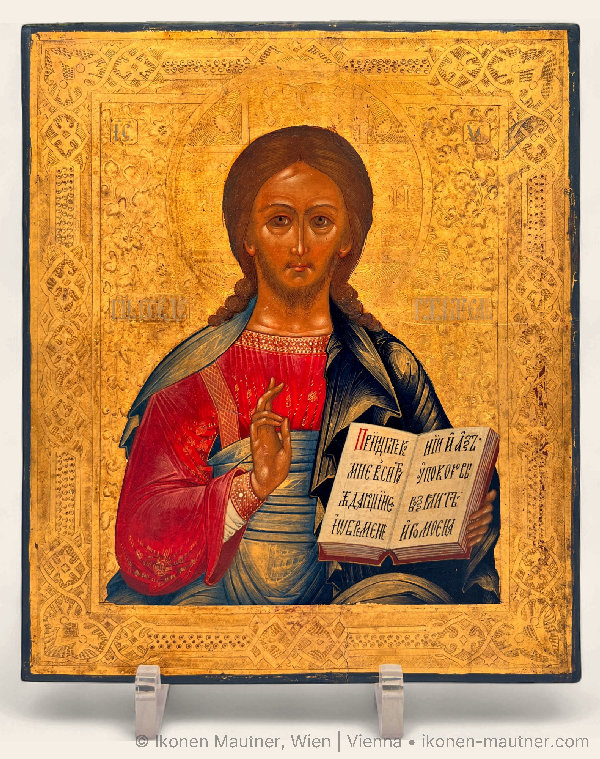
No. 25209
Christ Pantocrator, the Ruler of All
19th Century
31.1 × 26.4 cm (H × W)
Price on request
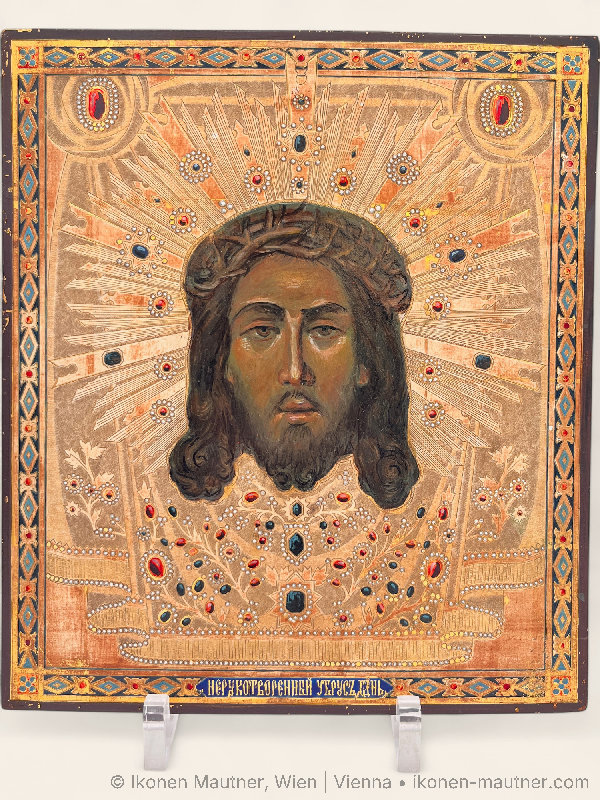
No. 25188
Mandylion
19th Century
31 × 27 cm (H × W)
Price on request
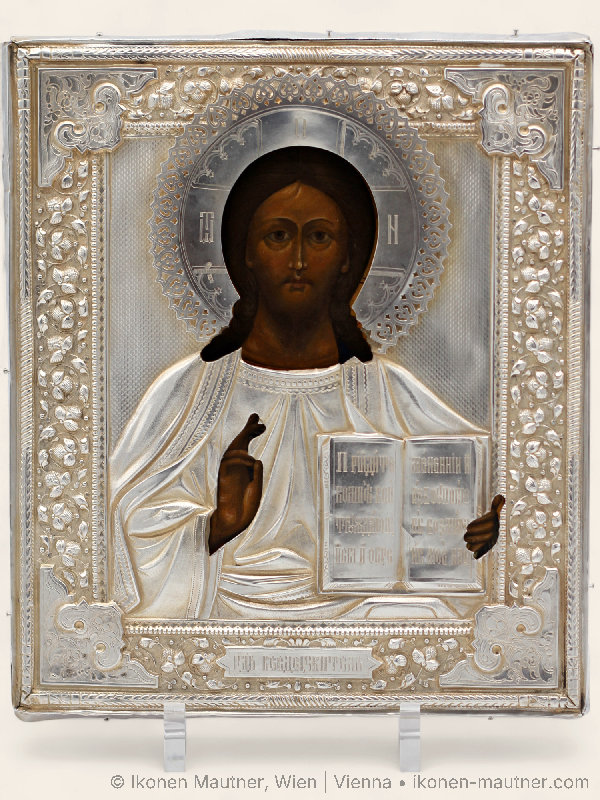
No. 25006
Christ Pantocrator, the Ruler of All
Around 1900 / Modern
31.5 × 27 cm (H × W)
Price on request
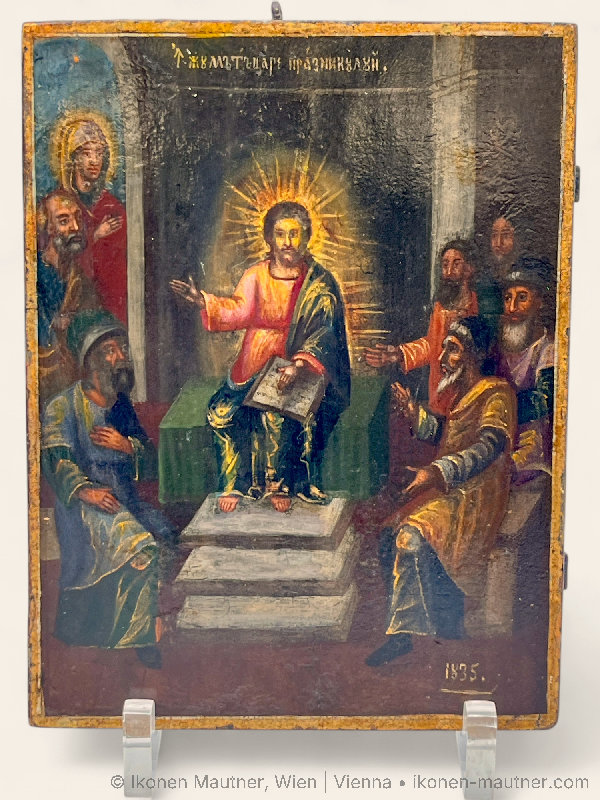
No. 24957
Mid-Pentecost
19th Century
23.5 × 18 cm (H × W)
Price on request
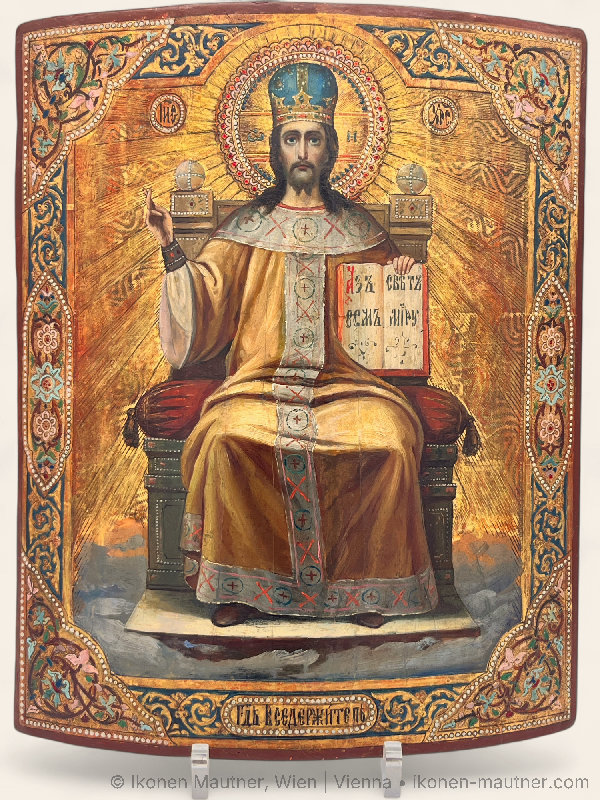
No. 24951
Christ Pantocrator, the Ruler of All
19th Century
44.5 × 38.5 cm (H × W)
Price on request
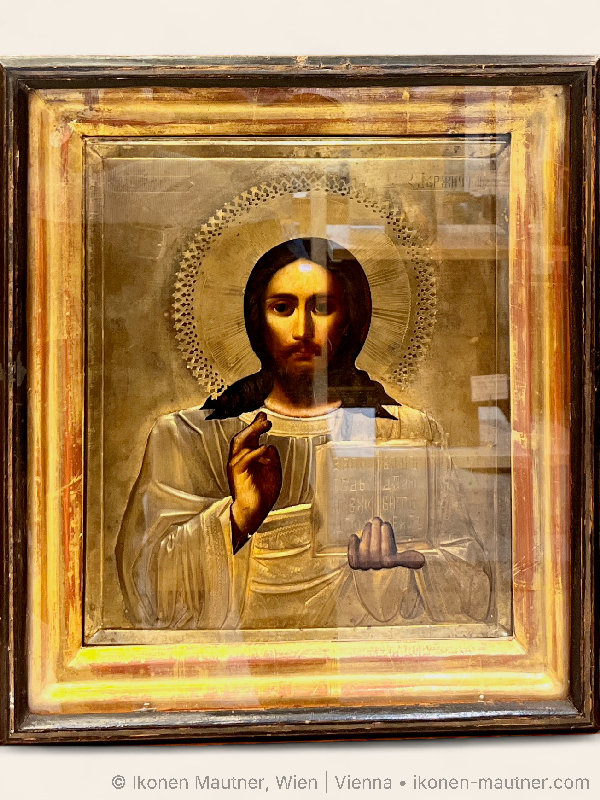
No. 24950
Christ Pantocrator, the Ruler of All
19th Century
40 × 35 cm (H × W)
Price on request
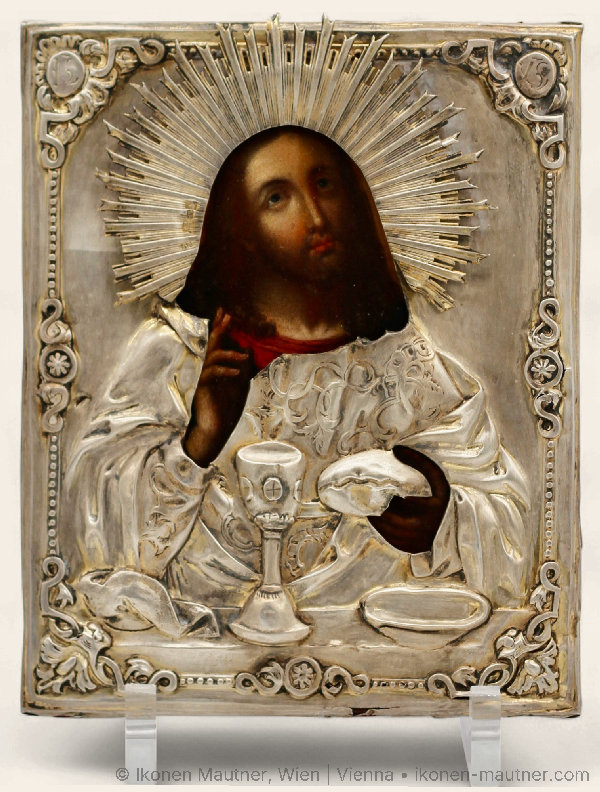
No. 24886
Christ at the Last Supper
19th Century
22.5 × 18 cm (H × W)
Price on request
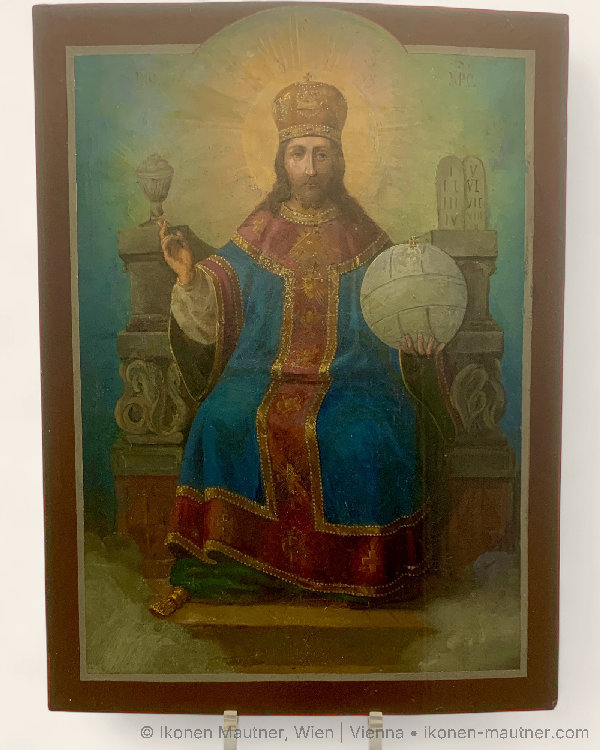
No. 24781
Christ Pantocrator, the Ruler of All
19th Century
52.5 × 39.5 cm (H × W)
Price on request
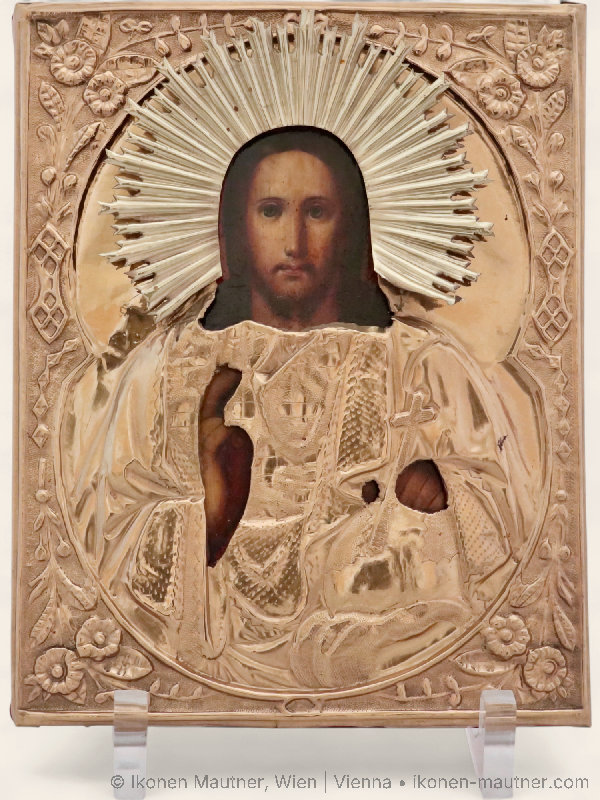
No. 24695
Christ Pantocrator, the Ruler of All
19th Century
22.5 × 17.5 cm (H × W)
Price on request
Frequently Asked Questions
What does Pantocrator mean?
Pantocrator is Greek for the Ruler of All or the Almighty. It is a title of Christ and the name of the type that shows him blessing and holding the Gospel.
Why does Christ hold a book and bless with one hand?
The book is the Gospel, the word of Christ, and the raised hand is the gesture of blessing. Together they show Christ as teacher and ruler.
What does IC XC mean on an icon?
IC XC is the common abbreviation of the Greek words for Jesus Christ. It appears beside the head of Christ in icons of Greek and Russian tradition.
How do I recognise a genuine antique Christ icon?
No single feature proves age. Panel, ground, paint, inscription and wear must agree with each other, and a written expert appraisal should confirm them.
Authenticity and buying from the US
Every icon from Ikonen Mautner comes with an Expertise, a written appraisal with a QR code that links to the record of the piece. Ikonen Mautner has traded in antique Orthodox icons in Vienna since 1959. Shipping to the United States costs between $100 and $250, depending on the icon. Every piece ships fully insured, and the insurance is free of charge.
No import duties apply. A small duty processing fee may occur.
Related guides
- Icons of the Mother of God: A Collector's Guide to Antique Orthodox Icons of Mary
- The Resurrection in Orthodox Icons: The Harrowing of Hades and How to Recognise It
- Icons of St John the Baptist: A Collector's Guide to the Forerunner in Orthodox Icons
- Icons of Saint Nicholas: A Collector's Guide to Antique Orthodox Icons of the Wonderworker
- Icons of Archangel Michael: A Collector's Guide to Antique Orthodox Icons of the Archistrategos
- Christ Pantocrator: the most sacred icon in Orthodox Christianity